What Is EEAT? (And No, Not the TikTok One)
If you scroll TikTok or Instagram — or you have a kid — you’ve probably heard the term “eats,” usually with a little finger gesture. She ate. It means she did great, she owned it. Google has its own version: EEAT.
This isn’t that eats. But they’re not completely unrelated, either.
EEAT is Google’s acronym for how it judges whether your content deserves to show up in search results. And here’s the part I love: it’s essentially what we’ve been preaching to our clients from day one — since 2014 — just with a Google acronym on it. If you want to show up in search for anything beyond your own brand name, this is the framework that decides whether you do.
So what does EEAT stand for? Experience, Expertise, Authoritativeness, and Trustworthiness. It’s the lens Google’s human quality raters use to evaluate whether content is genuinely helpful — and Google trains its ranking systems on those judgments. In plain English: Google is asking, “Has this person actually done the thing? Do they know what they’re talking about? Does anyone else vouch for them? And can we trust any of it?”
What does EEAT stand for, letter by letter?
| Letter | Stands for | What Google is asking |
|---|---|---|
| E | Experience | Have you actually done this, used this, lived this? |
| E | Expertise | Do you have real depth of knowledge on the subject? |
| A | Authoritativeness | Do others recognize you as a go-to source? |
| T | Trustworthiness | Is this accurate, transparent, and safe to act on? |
Experience is the newest letter — Google added it in December 2022, and the timing tells you everything. That was the moment AI-generated content flooded the internet. AI can synthesize information at scale, but it can’t have done the thing. It hasn’t run the campaign, treated the patient, or built the house. So Google carved out Experience as its own pillar: firsthand, lived involvement counts separately from book knowledge. (More on showing up where AI answers come from: /how-to-show-up-in-ai-search-results/.)
Expertise is about depth. For a medical or financial topic, Google expects formal credentials. For most business topics, it expects what Google calls “everyday expertise” — demonstrated knowledge, nuance, edge cases, the stuff you only know from doing the work for years.
Authoritativeness is whether the wider web treats you as a reference point. Do other credible sites link to you, mention you, quote you? This is the slowest pillar to build, and you can’t fake it.
Trustworthiness is the foundation the other three sit on. Google has said trust is the most important of the four — an untrustworthy page has low E-E-A-T no matter how experienced or expert it looks. Accurate content, a real business behind it, honest reviews, no misleading claims.
Is EEAT a ranking factor?
Not directly, and this is where most articles get sloppy. Google doesn’t calculate an “EEAT score” and plug it into the algorithm. Google’s own wording: “While E-E-A-T itself isn’t a specific ranking factor, using a mix of factors that can identify content with good E-E-A-T is useful.” (source) It’s the framework Google’s human raters use to judge whether the search results are surfacing genuinely good content — and then Google builds ranking signals that approximate those judgments.
The practical effect is the same: sites that demonstrate strong E-E-A-T signals consistently outrank sites that don’t, especially after core updates. And it matters most for what Google calls YMYL topics — “Your Money or Your Life” — health, finance, legal, safety. If bad information could genuinely harm someone, Google holds the content to a stricter standard.
We’ve been building this since 2014 — we just didn’t call it E-E-A-T
Here’s where it gets fun. Everything I just described? It’s what we’ve told every client since we launched in 2014: if you’re going to build a big brand, you have to treat your company like it’s a big brand from the beginning.
Most small businesses do the opposite. They pick one thing — “we’ll just post on social media” or “we’ll go all in on SEO” — and wonder why nothing compounds. The reality is that all of these things work together. Social, search, PR, content, reviews — they’re not separate strategies. They’re one foundation. We call it building the foundation of the house: you don’t start with the roof.
The Starbucks theory: be on every street corner
Think about Starbucks. There’s one on every street corner, so you never have to think about where to get coffee — they’re just there, everywhere, all the time. Your brand works the same way.
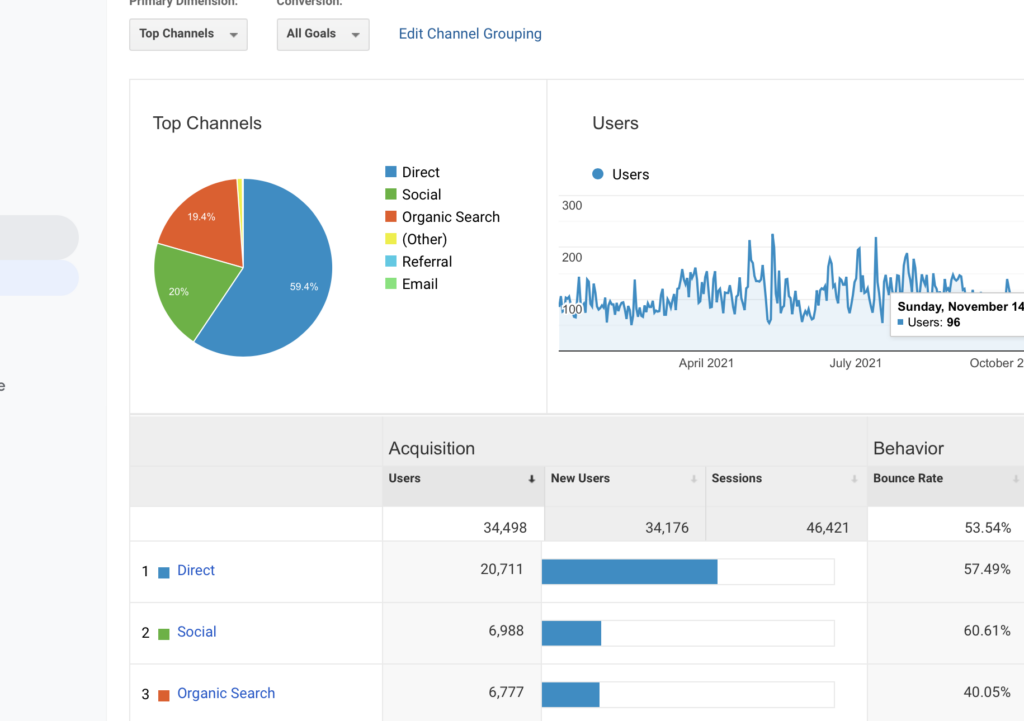
We break down all the different ways your brand can be on every street corner of the internet. When you post on social media consistently, you’re not just “doing social” — you’re showing up in Google search results.
Search your name right now: your website shows up first, then maybe some articles where you’ve been featured, then your social media pages. That’s not an accident. That’s omnipresence, and it does two things at once: it lets people see you in different worlds, and it lets the internet see you there too. Both build credibility. Both build trust.

And trust is the whole game — it’s literally the T that Google says matters most.
Authoritative backlinks, explained
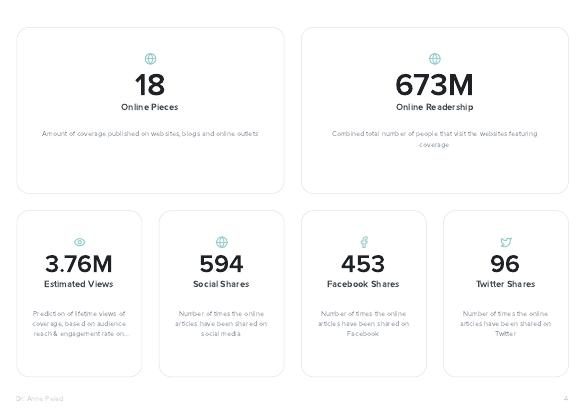
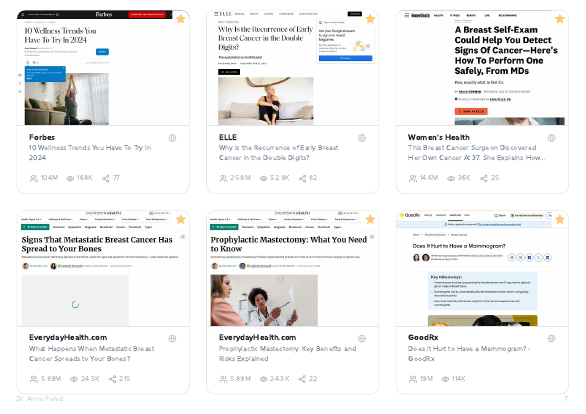
When you get PR — a real feature, a real interview, a real mention — you usually get a backlink: another website linking to yours. But not all backlinks are equal, and this is where the word “authoritative” earns its keep.
An authoritative backlink is a link from a website Google already trusts: a major publication, an established industry outlet, a respected institution. Think of it like a job reference. A reference from a stranger carries some weight. A reference from someone the hiring manager already respects carries ten times more. Google reads links the same way — it’s a vote of confidence, and votes from trusted sources count more.
One link from a real publication outweighs a hundred links from random directories nobody’s heard of. This is why PR is an SEO strategy, not just a vanity strategy. Every feature earns you the kind of backlink that tells Google: other credible sources vouch for this business. That’s Authoritativeness, built the legitimate way.
Casting a wide net is the strategy
We use the term “casting a wide net” with our clients constantly, because that’s what this is. You’re not betting on one channel. You’re executing a full-scope marketing strategy, regularly, across every surface that matters: your website, your content, your social profiles, your reviews, your press, your backlinks.
Each piece reinforces the others. The social posts surface in search. The search visibility drives profile visits. The press earns the backlinks. The backlinks build the authority. The authority makes everything rank higher. It’s a flywheel, and the businesses that commit to the full scope — from the beginning, like a big brand would — are the ones that become impossible to ignore. (This is also how smaller brands win where the giants aren’t looking: /small-business-ai-search/.)
That’s the magic recipe. Google just gave it an acronym.
What to do about E-E-A-T this week
You don’t need to overhaul everything tomorrow. Start where the signals are weakest:
- Put a real human on your content. Author bylines with actual bios, actual photos, actual credentials. Anonymous business blogs are invisible to E-E-A-T.
- Write from experience, in first person. “We tested this,” “in our experience,” “here’s what broke.” AI can summarize; it can’t have done the work.
- Get featured somewhere real. One PR placement with a backlink beats a month of directory submissions.
- Make sure searching your brand name surfaces you everywhere — website, social profiles, features, reviews. If it doesn’t, that’s your omnipresence gap.
- Keep every channel active and consistent. A dead Instagram from 2022 doesn’t build trust; it erodes it.
EEAT questions, answered
Does Google penalize AI content?
Not for being AI-made. Google rewards helpful content however it’s produced — what violates policy is mass-producing low-value pages to manipulate rankings. The real risk with AI content is that it can’t demonstrate Experience, which is exactly the pillar Google added for the AI era.
How long has EEAT been around?
The framework started as E-A-T around 2014. Google added Experience — the second E — in December 2022.
Do I need EEAT for a local business?
Yes. You don’t need medical-journal credentials to rank a plumbing site, but Google still asks the same four questions. Real reviews, a real owner behind the content, and being mentioned around the web all count.
What’s the fastest EEAT win?
Put a real human on your content — byline, photo, bio. Anonymous business blogs are invisible to the framework. Second fastest: get featured somewhere real and earn the backlink.
The bottom line
E-E-A-T isn’t a trick and it isn’t new — it’s Google’s name for something the best brands have always done: show up everywhere, know your stuff, earn other people’s trust, and be real about who you are. We’ve been building exactly that for clients since 2014.
If you want an honest read on where your brand actually stands — your foundation, your visibility, your authority — book a fit call: https://cartymedia.17hats.com/p#/scheduling/rJ_cCRZMyOck/s/114147